Enfield Chase to Crews Hill via Tingey Tops September 11, 2026
Birds
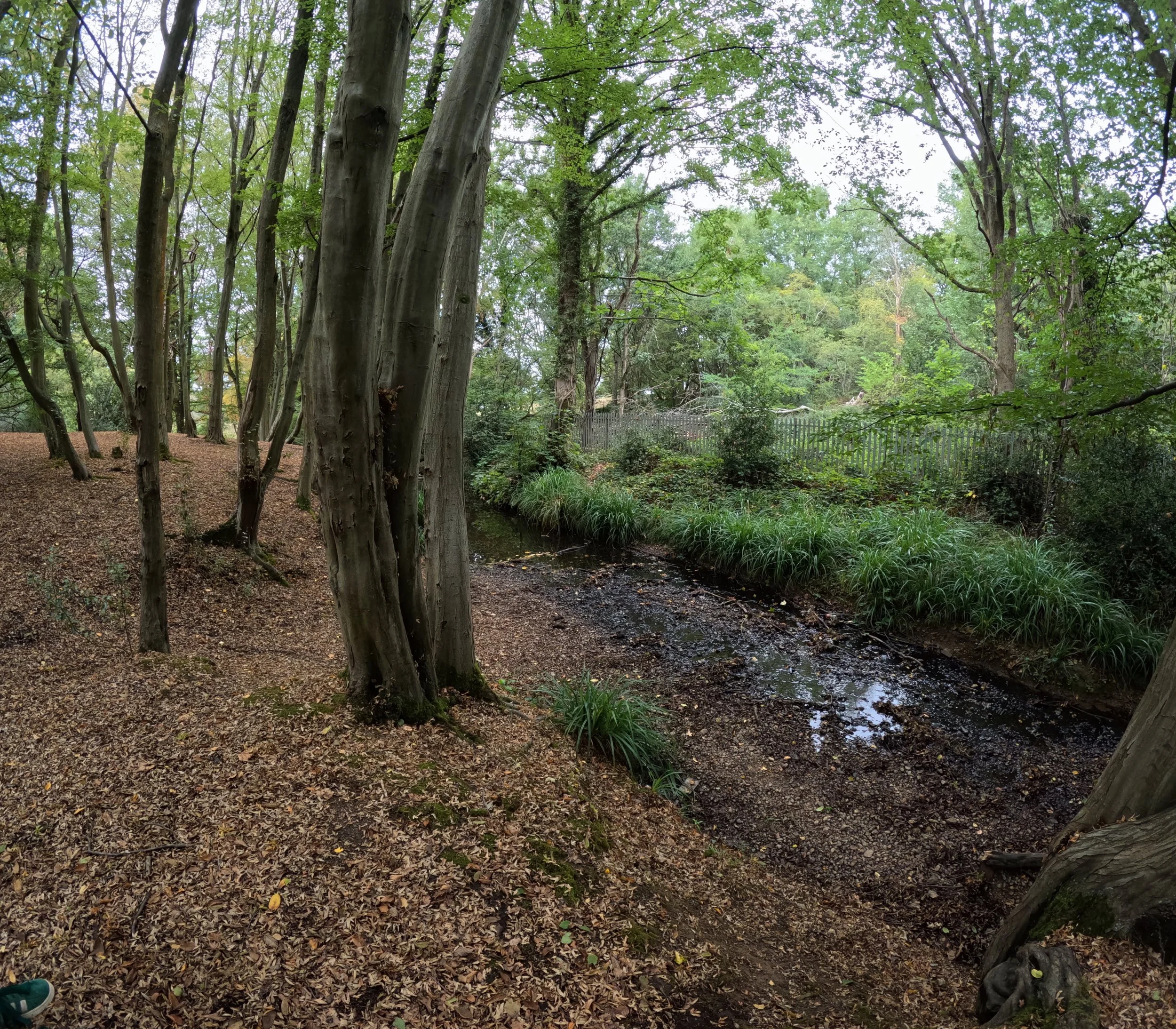
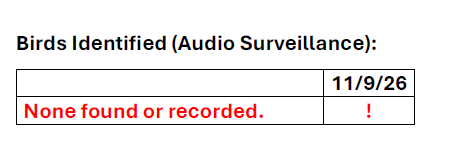
Today was worrying. Since starting the pilot project in May 2026, our walking bird surveys have never failed to detect any birds. However, we have some hypotheses about why the path we chose today did not show bird life. With drought officially declared this past summer in Enfield, we observed very dry, hard, cracked soil, and Tingey Tops was no longer a pond but resembled a lawn. This would mean ground-feeding birds can't probe for worms, and insect levels dropping, such as flies, aphids, and caterpillars, will impact other birds relying on this food supply. We would expect birds in very hot weather to conserve energy in the middle of the day, but this cooler September weather had us perplexed. With limited food supply and dried-out vegetation, we hypothesise that the birds have relocated. We will repeat this walk in the coming weeks to see if there has been any notable change.
Accessibility, Graffiti, Litter, Safety & Navigation:
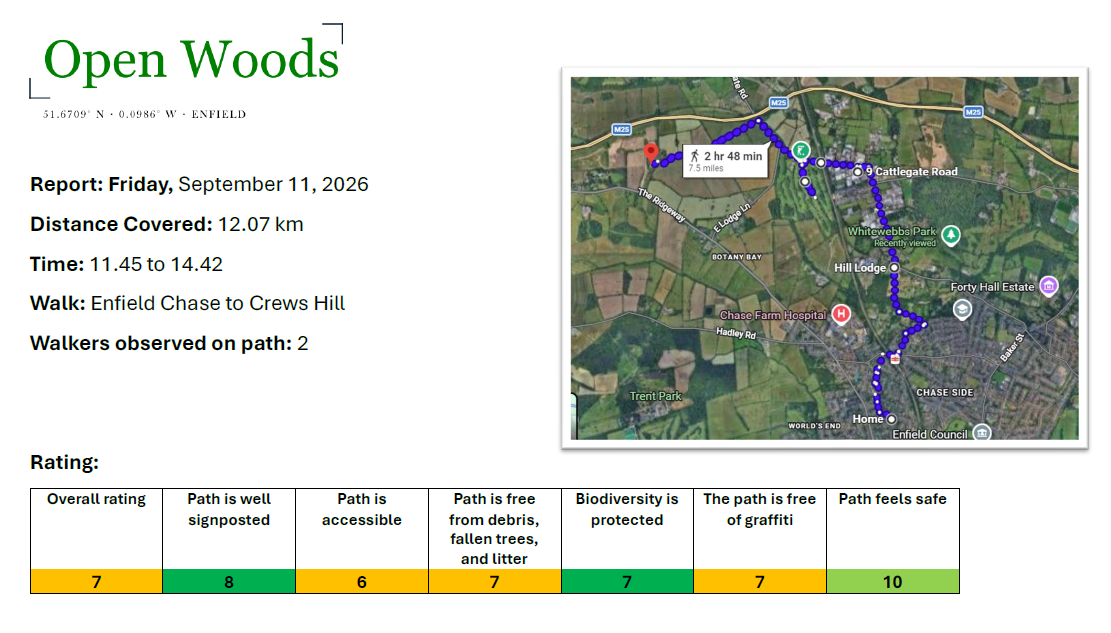
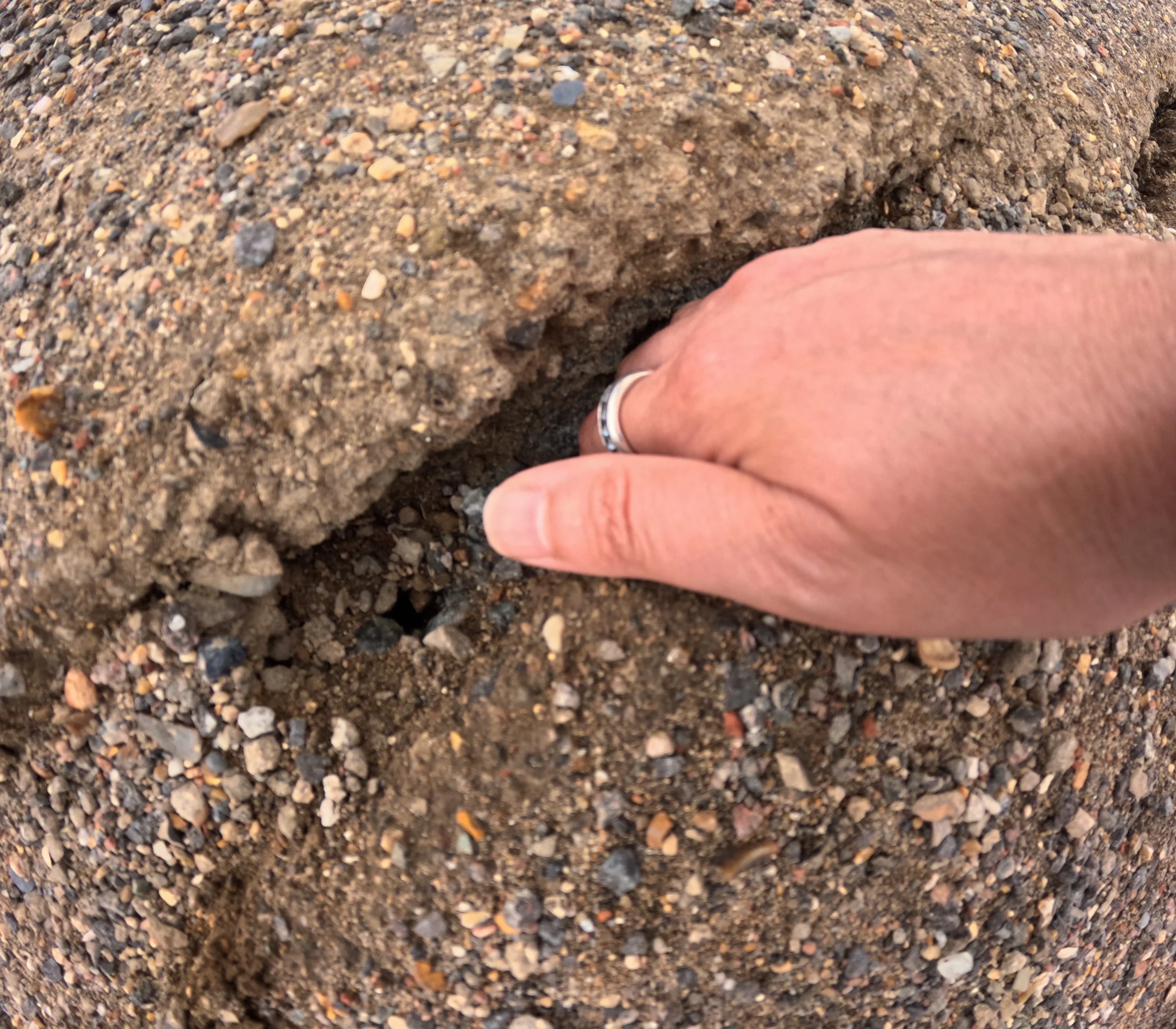
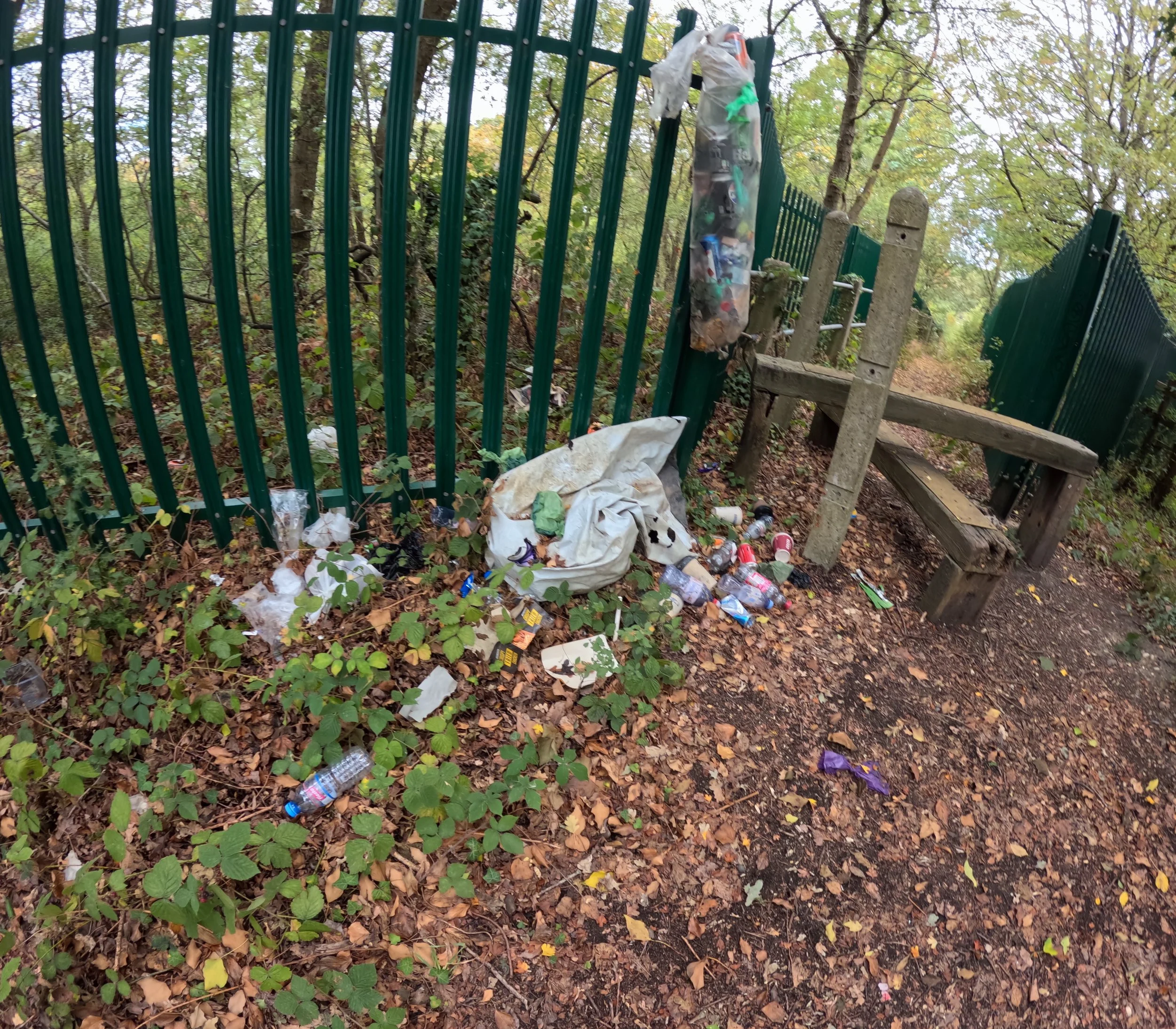
Signage is suitable on main paths. The recently resurfaced path has not performed well and is showing deep cracks so large we could fit our hand inside on the walking path near the red house and viaduct. Some graffiti and litter were observed. Path felt safe. The path was accessible at the graveyard near Gordon Hill Station end and towards Crews Hill Golf Course.
Trees & Vegetation
The trees we observed being felled a few weeks ago have now been mulched and appear tidier near Tingey Tops. Much of the area was very dry, and the greenest section of the walk was found by the Viaduct.
Biodiversity
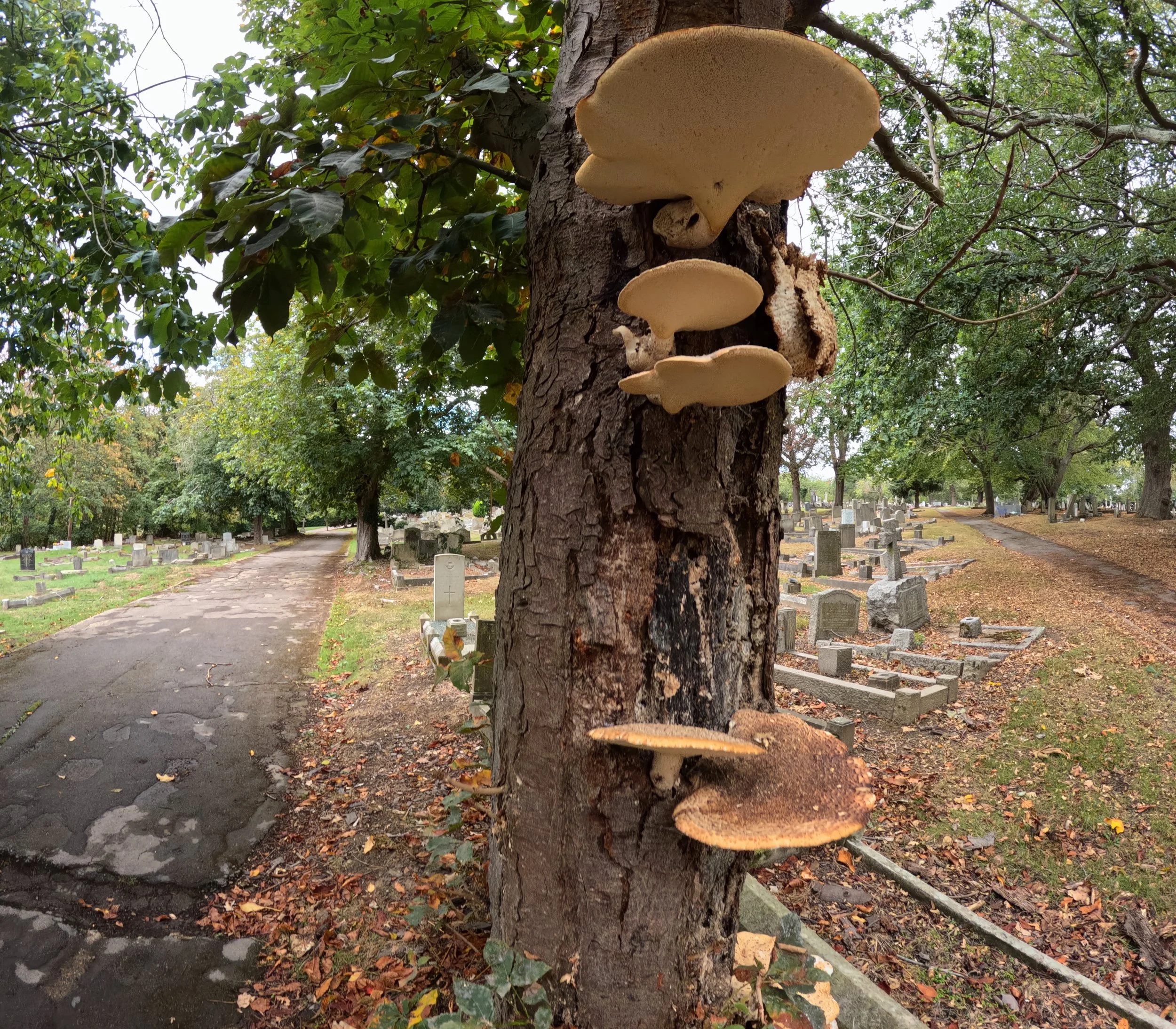
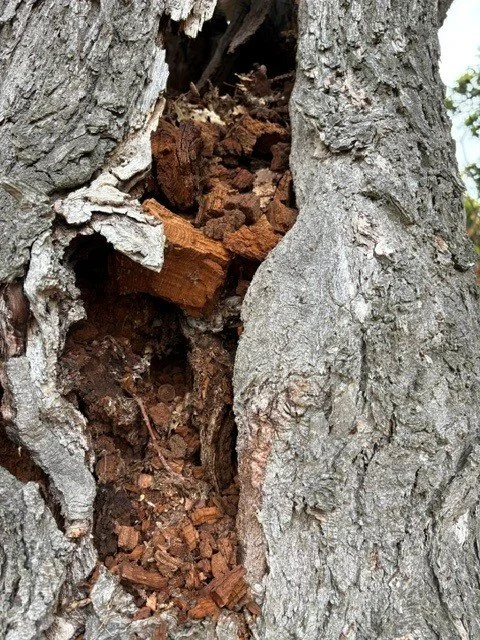
We observed mushrooms and moss returning to trees again. This is a welcome development in the area following the drought. The mushrooms we can see on the path are only a small part of its biodiversity. Mushrooms create mycelium, which lives inside tree bark. It slowly breaks down dead or dying wood into simpler nutrients. Without that, dead branches and fallen trees would pile up forever instead of turning back into soil that new plants can use. It's basically nature's composting system, and many insects, beetles, and grubs live inside that softened wood too, which then feeds woodpeckers, birds, and small mammals. Moss can be described as a damp “apartment complex” that offers insects shelter, soaks up rainwater, keeps tiny creatures warm in the winter, and provides birds with nesting materials. These observations matter to the local ecosystem and its recovery.